Regional Files · 15 cards

Fifteen cards on Egyptian regions read at city and neighbourhood scale.

Regional Files is the QPass standing file for cards that are about a place at neighbourhood or regional scale rather than a single museum or temple. The fifteen cards below cover Coptic Cairo as a walking quarter, Islamic Cairo with the Khan and the Mamluk monuments, the Cairo corniche as a working river, Alexandria as a Mediterranean reading rather than a Cairo annex, the Luxor west bank as a community living among the tombs, Aswan and the Nubian south, the Sinai interior with the monastic and military presences, and the Western Desert oases as a separate cultural geography. The cards are longer than the museum or temple cards because the subject is more diffuse — a quarter or a region rewards longer-form treatment in a way that a single monument does not.

Reham Elsayed handles the Cairo and Alexandria regional cards. Sara Abdelmaksoud writes the Theban-and-Nubian regional pieces. The Sinai and the oases are shared between Reham (Saint Catherine, Mount Sinai, Dahab) and Sara (Bahariya, Farafra, Siwa). The file rotates on a roughly annual cycle; each region gets a fresh card every twelve to twenty-four months depending on how much has changed on the ground. The cards do not duplicate the museum or site cards — they sit alongside, providing the regional context that the case-by-case readings deliberately do not include.

Cairo quarters · 5 cards

Hanging Church and Coptic quarterCard 062

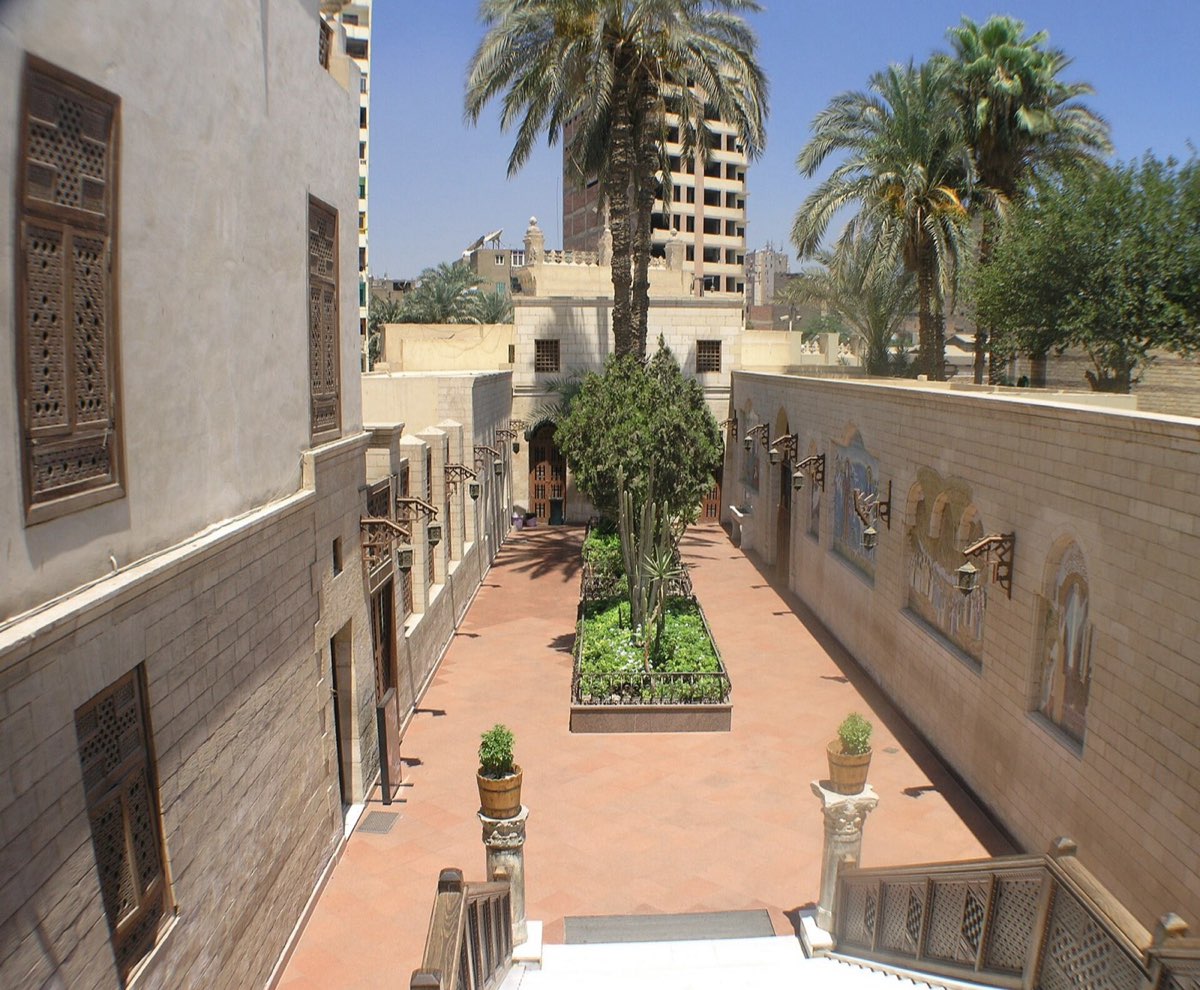
Coptic Cairo, rebuilt

The completion of the Hanging Church restoration in November 2025 and the slow shift in how the quarter reads — pilgrim, tourist, congregation, all at once. Walking route from Mar Girgis metro, dress code, donation conventions, the small lanes between the three churches and the museum.

R.E. · spring 2026Open card →
Khan el-Khalili at nightCard 064

The Khan after dark

The Khan el-Khalili evening as theatre — brass alley, spice corners, older cafés, the back-rooms where wholesale work happens, realistic haggle ranges in Egyptian pounds, lamp-makers' alley photographed across three evenings in three different seasons.

R.E. · summer 2024Open card →
Al-Muizz Street Mamluk monumentsCard 068

Al-Muizz Street — the Mamluk corridor

The historic Mamluk corridor from Bab Zuwayla to Bab al-Futuh, walked as a single architectural sequence rather than as a tourist street. The sabils, the Sultan Qalawun complex, the Bashtak palace, the dense layering of Mamluk and Ottoman commercial architecture along the kilometre.

R.E. · autumn 2024Open card →
Cairo corniche along the NileCard 074

The Cairo corniche as a working river

The Nile-side corniche from Garden City to Maadi read as a working river rather than a scenic backdrop. The dahabiya moorings, the working felucca traffic, the Sayeda Zeinab evening, the riverside cafés below the Garden City escarpment.

R.E. · summer 2025Open card →
Heliopolis Cleopatra StreetCard 078

Heliopolis as a working district

The QPass home district read at street level. The Baron Empain Palace, Roxy Square's surviving 1920s cinema, the residential-commercial mix along Cleopatra Street, the realistic taxi rate to the airport. Not a tourist destination — a working district that the desk knows well.

R.E. · winter 2025Open card →

Alexandria and the Mediterranean · 4 cards

Alexandria corniche MediterraneanCard 081

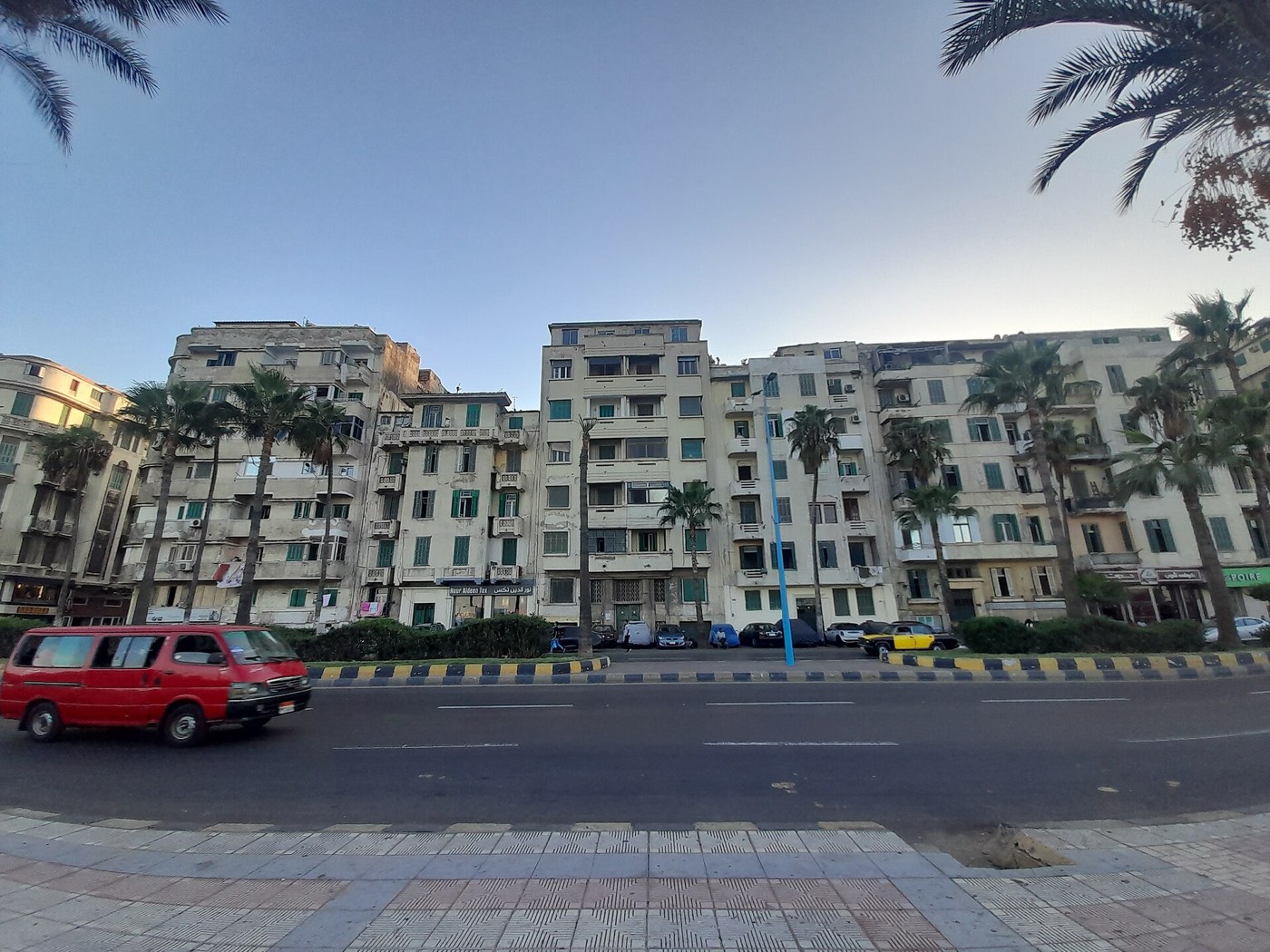
Alexandria as a Mediterranean reading

The argument for reading Alexandria as a Mediterranean city rather than a Cairo annex. The Greek and Italian commercial layers under the Mansheya facades, the residual French in the Quartier Latin streets, the Levantine kitchen in Bahari, what the Bibliotheca's architectural gesture is saying when read in this register.

R.E. · winter 2020Open card →
Bahari fish districtCard 084

Bahari — fish district read on foot

The Bahari district at the eastern end of the Alexandrian corniche, walked from the late-afternoon fish auction through to the evening restaurants. The Mohamed Ahmed branch that is actually the original, fish-market protocol for visitors, three named restaurants the desk returns to.

R.E. · summer 2024Open card →
Kom el-Shoqafa catacombsCard 086

Kom el-Shoqafa and the Roman amphitheatre

The two Roman-period sites in Alexandria — Kom el-Shoqafa catacombs and the Roman amphitheatre at Kom el-Dikka — read together as the city's most legible Roman layer. With the curator's note on the recent water-table conservation work at the catacombs.

R.E. · winter 2025Open card →

The Luxor west bank, Aswan, Sinai and the oases · 6 cards

Luxor west bank villageCard 091

Living among the tombs — the west-bank village

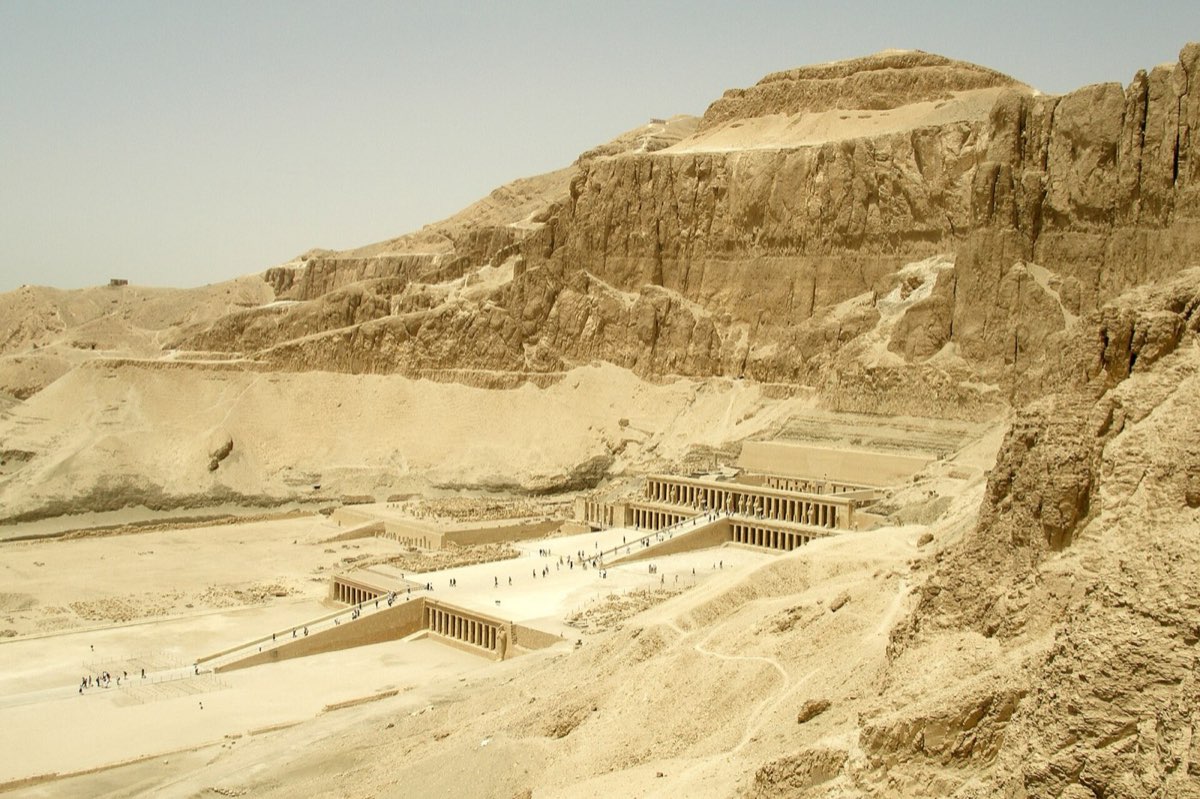
The west-bank villages — Gurna, Al-Tarif and the smaller clusters along the Theban necropolis — as a community living among the tombs rather than visiting them. The 2007 displacement campaign, the surviving traditional alabaster workshops, the working donkey routes between the necropolis and the cultivated strip.

S.A. · winter 2023Open card →
Luxor corniche with feluccasCard 094

The Luxor corniche, hotel by hotel

The Luxor corniche from the Karnak side down to the Old Winter Palace, read by hotel zone. The four practical zones — Karnak-side, Corniche north, Corniche central, Corniche south — and what each delivers for the temple-and-tomb visitor.

S.A. · spring 2025Open card →
Saint Catherine monasteryCard 099

Saint Catherine's Monastery, the icon collection

The Sinai monastery's icon collection — the oldest continuously-curated holdings of Byzantine icons anywhere — read alongside the architecture of the monastic precinct itself. With a long footnote on the Burning Bush courtyard rules and the realistic visitor protocol.

R.E. · autumn 2024Open card →
Mount Sinai at dawnCard 102

Mount Sinai overnight

Overnight climb of Mount Sinai with the dawn descent — what the path actually feels like at 02:00, what the summit chapel rules are, why the camel option is more honest than the literature usually admits.

R.E. · winter 2025Open card →
Siwa Oasis villageCard 105

The Western Desert oases — Bahariya, Farafra, Siwa

The three accessible Western Desert oases read as a single cultural geography. Driving distances, realistic security and checkpoint situation, the Berber-language Siwan layer, what the White Desert delivers if you take the standard two-night outing.

S.A. · winter 2025Open card →
Aswan corniche eveningCard 108

Aswan as a river city

Aswan read as the slowest city in Egypt, in the good sense. The corniche end-to-end walk (4 km in light evening traffic), the working felucca economy, the Nubian-village ferry, the Old Cataract as a hotel and as a structure, and what the Aswan day actually feels like compared with Cairo or Luxor.

S.A. · winter 2025Open card →

How the regional cards work alongside the site cards

The Regional Files cards are the contextual layer of the publication. Where a Flagship Collections card or an On-the-Ground Sites card is a close reading of a single institution or monument, a Regional File is the longer-form essay on the geography that holds the site. The two readings are deliberately separate — a subscriber visiting Coptic Cairo benefits from reading both the Coptic Museum card for the institution-by-institution case and the Coptic Cairo regional card for the quarter as a whole. The case-by-case reading gives you the visit; the regional reading gives you the place.

The desk has a working rule that no Regional File duplicates the visit information of a site or museum card. The opening hours, ticket structures, supplements and side-door tricks stay in the site or museum cards. The Regional Files carry the architectural reading, the social history, the resident community, the food, the residential rhythm, and the layering of historical periods that the case-by-case visit cannot show. The two layers together produce something closer to a guide for an adult reader; either layer alone produces something more like a tourist pamphlet or an academic essay.

Six recurring questions on the regions

Where is the actual line between Coptic Cairo and Old Cairo?

Coptic Cairo is the older Christian quarter inside the Roman fortress walls — three churches plus the Coptic Museum, within a five-minute walk of Mar Girgis metro. Old Cairo is the broader Fustat district, the seventh-century Arab military camp that grew into the city. The two overlap geographically but read differently — Coptic Cairo is a heritage quarter, Old Cairo is a working district.

Is Islamic Cairo really walkable?

Mostly yes. Al-Muizz Street between Bab Zuwayla and Bab al-Futuh is genuinely walkable end-to-end and is the architectural spine of the quarter. The side streets connecting to it are more variable — some are pleasant, some are hot and dusty. Card 068 lays out the practical route.

Is Alexandria worth more than a day-trip?

Yes, if you are reading the city as a Mediterranean place rather than as a destination for the major sites. The day-trip pattern does the major sites well but does not give you the corniche walk, the Bahari evening, the small streets of Mansheya, or the residential rhythm of Stanley and Sidi Bishr. Two nights minimum.

How safe is the Sinai interior?

The tourist corridor (Saint Catherine, the Mount Sinai climb path, Dahab, Sharm el-Sheikh, the Ras Mohammed dive sites) is safe in the everyday sense, with a heavy tourist-police presence. The northern Sinai is under intermittent military operation and is not a tourist destination.

Are the Western Desert oases accessible without a tour?

Technically yes — Bahariya by public bus from Cairo, Farafra and the White Desert by 4x4 transfer, Siwa by overnight bus. In practice most visitors go with a small-group operator out of Cairo because the desert driving is technical and the security checkpoints require local knowledge.

Why no card on the Red Sea coast resorts?

Because they are tourist resorts rather than heritage destinations. The cultural-heritage angle that QPass covers does not extend to the resort coast. We cover Sharm and Dahab in the Sinai context because the dive sites and Saint Catherine's are nearby, but a stand-alone Red Sea card would not match the publication's brief.

Regional Files rotate annually.

Each region gets a fresh card every 12–24 months depending on how much has changed on the ground. Subscribers see the new readings in the printed half-year visit-letter first; the online cards update within a working week.

Subscribe for the visit-letter